Play Text-to-Speech:
1. Introduction: Cogeneration as an Integrated Energy System
Modern industrial facilities are no longer evaluated solely on production output—they are assessed on energy efficiency, reliability, and sustainability. In this context, cogeneration, also known as Combined Heat and Power (CHP), has become a cornerstone of efficient industrial energy systems.
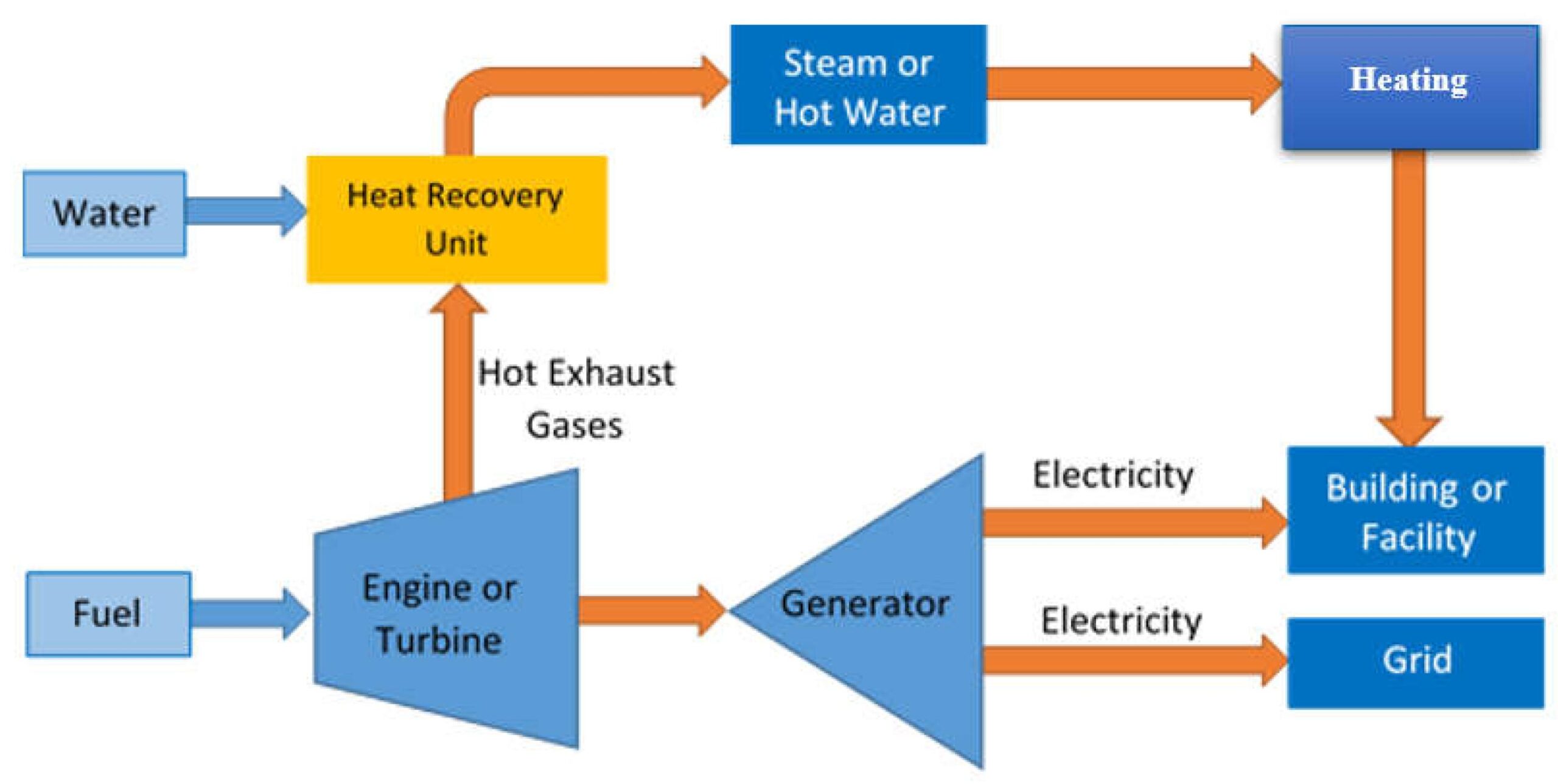
Cogeneration simultaneously produces:
- Electrical energy (for plant consumption or export)
- Thermal energy (steam) for process use
Unlike conventional power generation, where waste heat is rejected to the environment, cogeneration captures and utilizes this heat, achieving overall efficiencies of 70–90%, compared to ~35–50% for conventional systems.
From an engineering perspective, cogeneration is not just a collection of equipment. It is:
A tightly coupled thermodynamic, mechanical, electrical, and control system where disturbances in one domain propagate across the entire plant.
This article provides a comprehensive, engineering-focused exploration of four critical domains:
- Cogeneration system architecture
- Turbine and boiler fundamentals
- Electrical protection systems
- Control systems and automation
The discussion is aligned with global engineering practices and standards from organizations such as ISO, IEEE, API, and ASME.
2. Cogeneration System: Architecture and Energy Flow
2.1 Basic Concept of Cogeneration


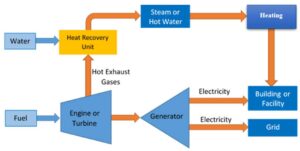
A typical cogeneration system consists of:
- Fuel source (natural gas, coal, biomass, or recovery fuel)
- Boiler or heat recovery system
- Steam turbine
- Generator
- Process steam distribution network
2.2 Thermodynamic Cycle
The system operates based on the Rankine cycle:
- Water is heated in the boiler → becomes high-pressure steam
- Steam expands through the turbine → mechanical energy
- Turbine drives the generator → electrical energy
- Exhaust steam is used for:
- Process heating
- Drying
- Chemical reactions
2.3 Types of Cogeneration Systems
1. Backpressure Turbine
- Exhaust steam used directly in process
- No condenser
- High overall efficiency
2. Extraction-Condensing Turbine
- Flexible operation
- Can supply both:
- process steam
- electricity export
2.4 Key Performance Indicators (KPIs)
- Heat Rate
- Thermal Efficiency
- Availability (%)
- Forced Outage Rate
- Steam-to-Power Ratio
2.5 Engineering Challenge
The main challenge in cogeneration is:
Balancing electricity generation and process steam demand under dynamic operating conditions.
This requires tight coordination between:
- boiler firing rate
- turbine load
- process demand
- control systems
3. Turbine Fundamentals
3.1 Steam Turbine Basics


A steam turbine converts thermal energy → mechanical energy through steam expansion.
3.2 Types of Steam Turbines
1. Impulse Turbine
- Pressure drop occurs in nozzles
- Rotor experiences impulse force
2. Reaction Turbine
- Pressure drop occurs across blades
- Continuous acceleration
3.3 Main Components
- Rotor and blades
- Casing
- Bearings (journal & thrust)
- Governor valves
- Sealing system
3.4 Governing System
The turbine governor controls:
- speed
- load
By regulating:
- steam flow via control valves
3.5 Common Failure Modes
- Blade erosion or fatigue
- Rotor imbalance
- Bearing failure
- Steam contamination (wet steam)
3.6 Reliability Considerations
- Vibration monitoring
- Lubrication system integrity
- Proper alignment
- Thermal expansion management
4. Boiler Fundamentals
4.1 Boiler Function


A boiler converts:
chemical energy → thermal energy → steam
4.2 Types of Boilers
1. Fire-Tube Boiler
- Hot gases inside tubes
- Water outside
2. Water-Tube Boiler
- Water inside tubes
- Hot gases outside
- Used in high-pressure systems
4.3 Key Systems
- Combustion system (burners)
- Feedwater system
- Steam drum
- Superheater
- Economizer
4.4 Critical Parameters
- Pressure
- Temperature
- Drum level
4.5 Boiler Control Challenges
- Maintaining stable combustion
- Preventing drum level trip
- Avoiding thermal stress
4.6 Common Failure Modes
- Tube leakage
- Fouling and scaling
- Burner malfunction
- Control instability
5. Electrical Protection Systems
5.1 Importance of Protection
Electrical protection ensures:
- equipment safety
- system stability
- fault isolation
5.2 Generator Protection


Key protections include:
1. Differential Protection (87G)
- Detects internal faults
2. Overcurrent Protection (50/51)
- Detects overload
3. Earth Fault Protection
- Detects insulation failure
4. Reverse Power Protection
- Prevents motoring condition
5.3 Transformer Protection
- Differential protection
- Buchholz relay
- Overfluxing protection
5.4 Motor Protection
- Thermal overload
- Phase imbalance
- Locked rotor
5.5 Synchronization
Before connecting generator to grid:
- Voltage must match
- Frequency must match
- Phase angle must match
5.6 Standards and Practices
Protection design follows:
- IEEE
- IEC
6. Control Systems in Cogeneration
6.1 Role of Control Systems
Control systems maintain:
- stability
- efficiency
- safety
6.2 Architecture


Typical architecture:
- Field instruments (sensors, transmitters)
- Controllers (PLC/DCS)
- HMI/SCADA
6.3 Key Control Loops
1. Boiler Drum Level Control
- Critical for safety
- Uses 3-element control:
- steam flow
- feedwater flow
- drum level
2. Combustion Control
- Maintains air-fuel ratio
3. Turbine Speed Control
- Maintains frequency
4. Pressure Control
- Balances steam demand
6.4 PID Control
Most loops use:
- Proportional
- Integral
- Derivative
Tuning is critical:
- Poor tuning → instability
- Oscillation → trip risk
6.5 Advanced Control
- Model Predictive Control (MPC)
- Load forecasting
- Optimization algorithms
6.6 Common Control Issues
- Sensor drift
- Valve hysteresis
- Signal noise
- Communication failure
7. Integration Across Systems
This is where true engineering expertise emerges.
7.1 Example Interaction
- Boiler instability → steam pressure fluctuation
- Steam fluctuation → turbine load variation
- Load variation → generator instability
- Electrical instability → trip
7.2 Cross-Discipline Thinking
An expert must:
- understand cause-effect chain
- avoid silo thinking
- integrate mechanical, electrical, and control perspectives
8. Reliability and Maintenance Strategy
8.1 Maintenance Approaches
- Preventive maintenance
- Predictive maintenance
- Reliability-centered maintenance (RCM)
8.2 Key Tools
- Vibration analysis
- Thermography
- Oil analysis
8.3 Decision-Making Framework
- Risk-based inspection
- Cost-benefit analysis
- Availability optimization
9. Engineering Decision-Making in Cogeneration
At the expert level, decisions are not purely technical.
They involve:
- production impact
- safety risk
- cost implications
Example Decision
Problem:
- turbine vibration rising
Options:
- continue operation
- reduce load
- shutdown
Decision depends on:
- severity
- trend
- risk tolerance
10. Conclusion: From Equipment Knowledge to System Mastery
Cogeneration systems represent one of the most complex engineering environments in industrial operations. Success in managing such systems requires:
- deep technical understanding
- cross-disciplinary integration
- strong analytical capability
- sound engineering judgment
Mastery of:
- turbine and boiler fundamentals
- electrical protection systems
- control systems
is not sufficient in isolation.
The real value lies in:
integrating these domains into a cohesive system that is reliable, efficient, and safe.
Final Insight
In high-performance industrial environments:
- Equipment knowledge is expected
- System understanding is required
- Decision-making capability defines expertise
And ultimately:
The role of an Expert Maintenance Engineer is not to fix problems, but to prevent them—by understanding how systems behave before they fail.

Maintenance, projects, and engineering professionals with more than 15 years experience working on power plants, oil and gas drilling, renewable energy, manufacturing, and chemical process plants industries.